Technologies for Best Practices in Physical Security Ops and Management: What They Are and How You Can Use Them

Trackforce
August 26, 2020 · 10 min read
As we navigate 2020, the security guard industry has sought out tools and technologies capable of carrying their business operations through this new normal.
Tools that enhance remote supervision, track guards, provide consistent communications, and maintain safe visitor management interactions have proven essential now more than ever.
Editor’s note: This article was first published in 2020. The core technologies it covers have become standard practice since then, so we have added an updated look at how they are used today and a guide to building your physical security technology stack.
Key takeaways
- Remote monitoring is now a core capability.
Supervisors oversee guards and sites from a command center instead of relying on site visits alone. - Video and AI extend what one person can watch.
Remote and virtual guarding cover areas that are hard, risky or costly to staff in person. - Guard tours and visitor management create proof.
Every checkpoint scan and visitor entry becomes a time-stamped record you can share with clients. - Digital post orders keep every officer current.
Updates reach officers instantly, and acknowledgment proves they were received. - One connected platform beats a pile of tools.
TrackTik brings guard tours, incident reporting, visitor management, post orders, dispatch and analytics together.
Which Are the Most Important Tools of the Trade for Physical Security?
We’re listing the most important tools that have risen to the top for this new normal and are boosting security ops and management’s success:
- Remote Monitoring and Video Systems
- Temperature Biometrics
- Contactless Guard Management
- Guard Tours
- Visitor Management
- Post Orders
Remote Monitoring and Video Systems
What is remote monitoring?
For physical security firms, remote supervision isn’t a new thing. In fact, it’s an essential component to managing security guards in today’s age, especially solitary guards working graveyard, or second shifts.
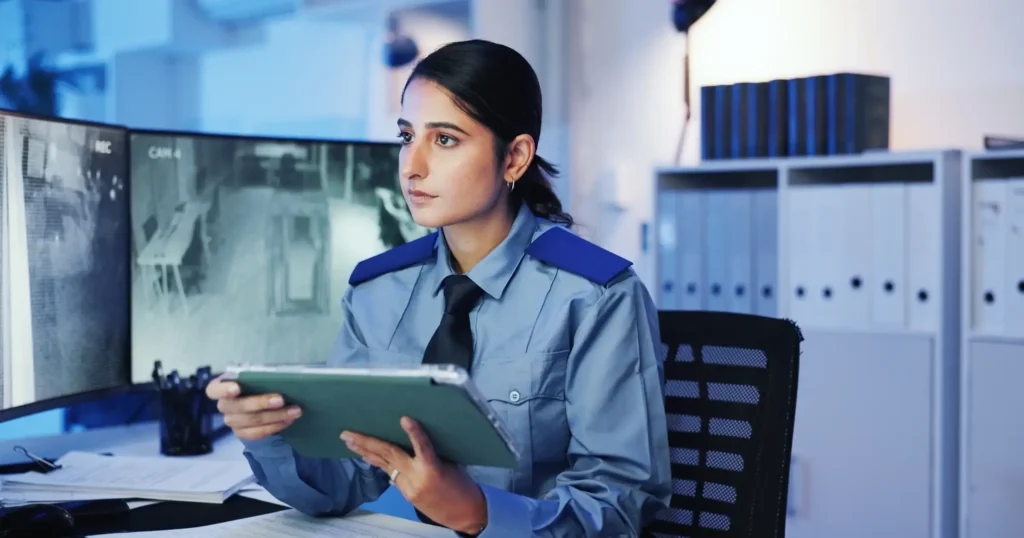
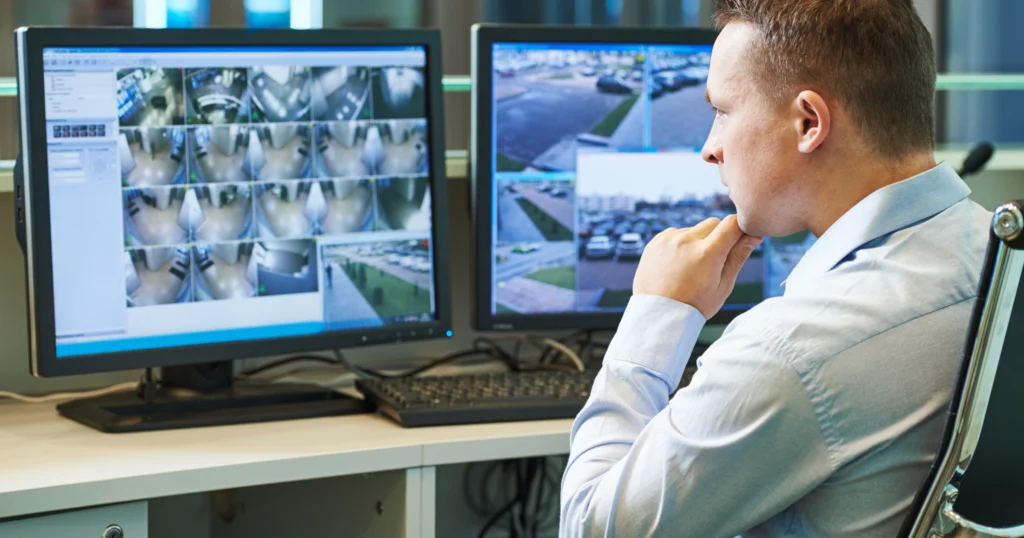
Remote monitoring for physical security is the tracking, visualization, and control of guard activity and actions from a single command center. Remote monitoring can provide support to supervisors overseeing large or multiple sites in different locations and harboring different security challenges.
Remote monitoring is best used for ensuring security companies maintain contract agreements and for providing constant visibility on the facilities they are tasked in securing. This is especially useful for operations requiring remote supervision due to health and safety reasons.
How do video systems contribute to remote monitoring?
Video systems used in physical security such as CCTV, or with the integration of a command center, have long been the gold standard to remote supervision.
Due to its nature, a video surveillance system is the eyes and ears of remote supervisors who are physically not on site.
Video systems provide vigilance on areas that may be hard to access or are too risky for physical monitoring.
In the new normal, video systems have increased remote monitoring capabilities for physical security by allowing for the rise of a “virtual security guard” to monitor areas where access is limited due to health and physical distancing requirements.
A “virtual security guard” is any stationary guard posted remotely with access to a site’s security system through a real-time command center. Today, this approach has grown into AI-assisted remote guarding.
New Age Tech: Biometrics
If it sounds straight out of a science fiction film, it may be because of its connection to technology related to our bodies.
What is biometrics?
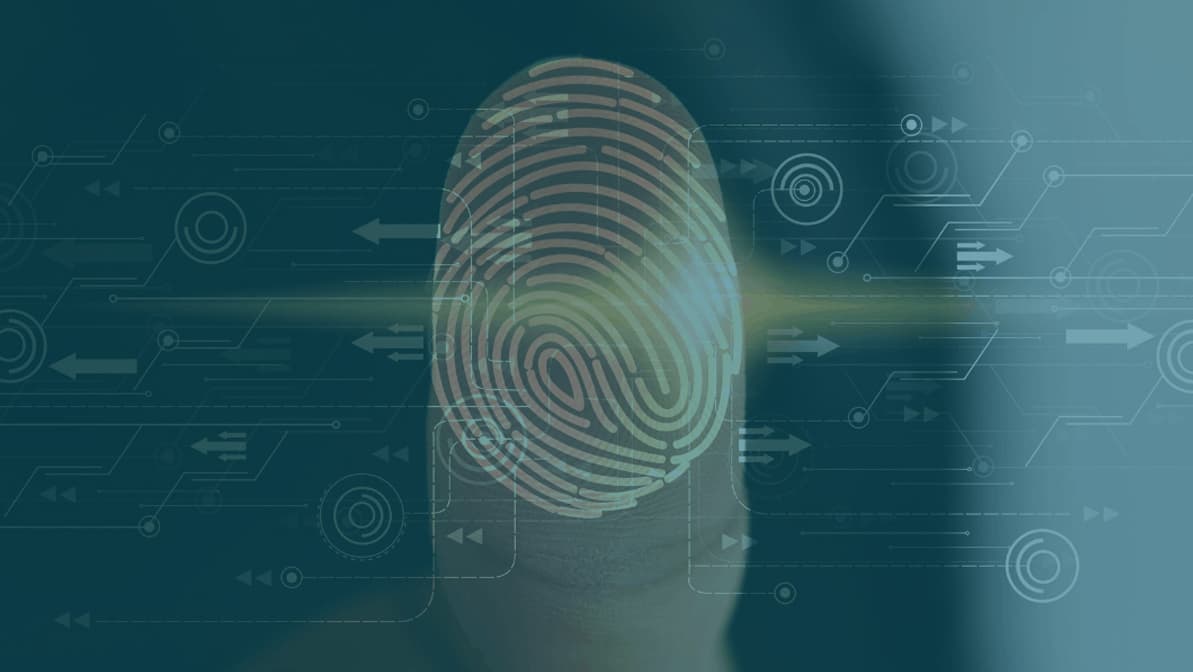
Biometrics is a fancy way of using the human body, with technology, for identification and verification purposes. Technology using biometrics can easily be used to verify an individual’s identity for safer access control on visitors and even guards accessing remote sites.
Like all new technology used for physical security, biometrics includes a few things that are new and some that are familiar:
- Fingerprinting
- Hand and finger geometry
- Facial recognition technology
- Retinal scanning
We’ve seen the physical security industry harness the benefit of biometric technology to unlock doors with a scan, to identify an employee or visitor’s identity with a fingerprint, or now to measure the safe temperature of a visitor before accessing a secure building, which is especially useful for contactless solutions.
Contactless Guard Management
The new normal has forced the physical security industry to take a stand in mitigating the spread of the virus. This has included implementing contactless security protocols for supervisors and guards still working on site or remotely.
With so many changes to processes and guidelines for safe operation within a business, companies are struggling to not only keep up with the guidelines, but also effectively implement procedures and training for their team on enforcing them.
However, there are tools security guard companies can implement in order to ease the guideline and procedure stress.
Remote guard tour tracking
Situational awareness for any security company owner requires strong vigilance when monitoring for relevant risks to both business and operational environments. This is compounded when your team is remote and is operating in this new normal.
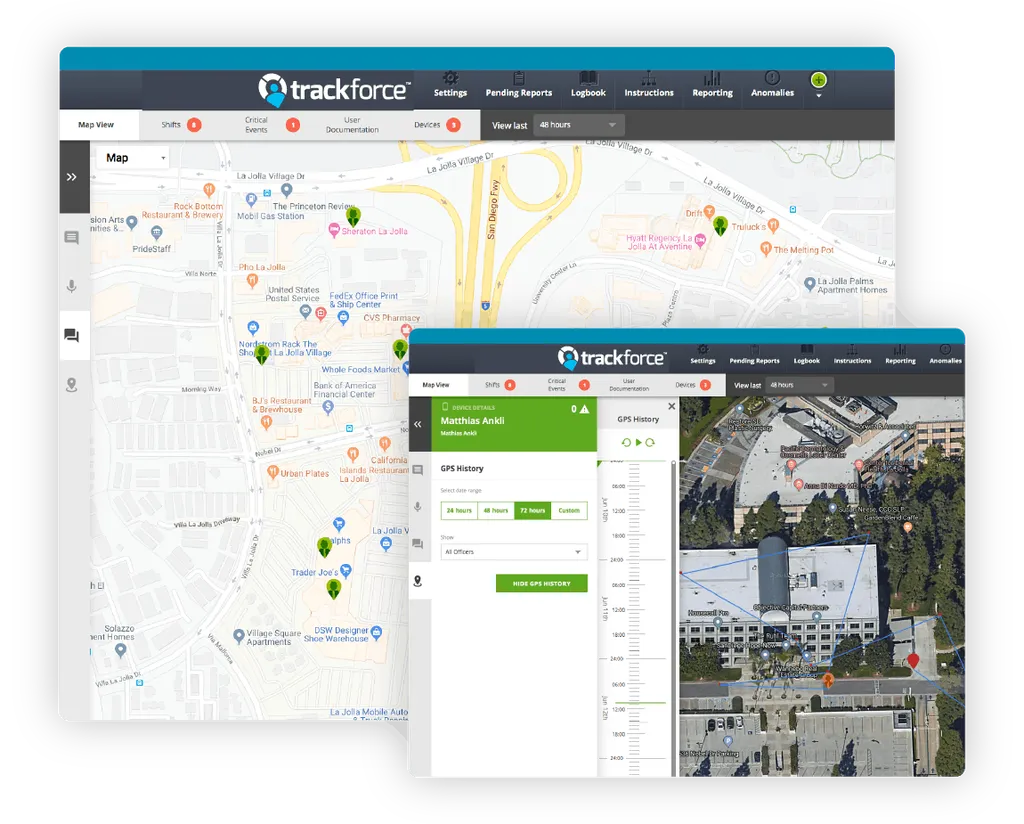
In order to know that your guards are being accountable, proper guard tour tracking during shifts will let you know if guards are properly and safely completing duties, if guard tours are incomplete, or if an incident occurs.
Using a geolocation guard tracking solution, supervisors can get real-time feedback as to where their guards are and dispatch them quickly when emergencies arise. Coupled with visitor management, officers will be able to pull a complete list of visitors on campus in seconds.
Visitor management
In this new normal, security teams still must protect and manage the security of onsite property despite weathering the initial health challenges.
Systems with visitor management capabilities specialized for the security industry are more equipped in handling the influx of security guard duties when interacting with third-party vendors and visitors in the new normal.
Particularly, those that can provide visitor pre-registration lists, onsite visitor list, and assigned visitor registration keys for quicker, and safer, access control.
Post orders
Those who deal with tracking down security officers already know that ensuring a post order has been completed as intended can be challenging, especially if there is no real-time verification, notification, or acknowledgement from that security guard.
Security companies can use digital post orders to update supervisors and guards in a contactless manner, without the need for in-person notification or even training.
Security guards need to be trained on procedures when it comes to emergency situations such as, machinery malfunction, fires, natural disasters, or other critical incidents. Each of these incidents requires precise training to mitigate, or better yet, avoid the worst-case scenario.
Having standardized tasks, duties, and responsibilities maintains guard safety by establishing a track record that is well documented, ensuring a security company adheres to changing health regulations.
What Technologies Can We Expect for the Future of Physical Security?
As security firm owners are currently adopting new strategies to ensure safety and security in this new normal, new technologies are making it easier, and safer, for supervisors and guards to work remotely.
With new tools that enhance remote visibility, track guards, and provide consistent communications, physical security professionals can ensure that all actions are favored toward maintaining safety in this new normal.
How These Technologies Have Evolved Since 2020
Some pandemic-era tools faded, while others became the foundation of modern physical security best practices:
| Technology | In 2020 | Today |
|---|---|---|
| Remote monitoring and video | Virtual guards covering sites with limited access | AI-assisted remote guarding connected to officer dispatch |
| Temperature biometrics | Health screening at building entrances | Largely retired. Biometrics now focus on access control, within privacy laws such as Illinois’ Biometric Information Privacy Act |
| Contactless guard tours | A way to limit contact on patrol | Standard proof of service, with NFC, QR code and GPS checkpoints |
| Visitor management | Pre-registration for distancing | Core access control, with real-time visitor lists and evacuation lists |
| Post orders | Contactless updates to officers | Real-time updates that officers must acknowledge |
| Incident reporting | Paper or basic mobile forms | Time-stamped reports with photos, video and AI writing assistance |
Building Your Physical Security Technology Stack
Whether you run a security firm or an in-house security team, it pays to build in layers. Start with the tools that prove the work, then add visibility and intelligence:
- Guard tours and incident reporting. The foundation of accountability. Every patrol and incident becomes verified, time-stamped evidence through incident reporting and guard tours.
- Digital post orders and communication. Officers always have current instructions, and you can prove they received them.
- Visitor management. Pre-registration, visitor lists and evacuation lists keep every entrance under control.
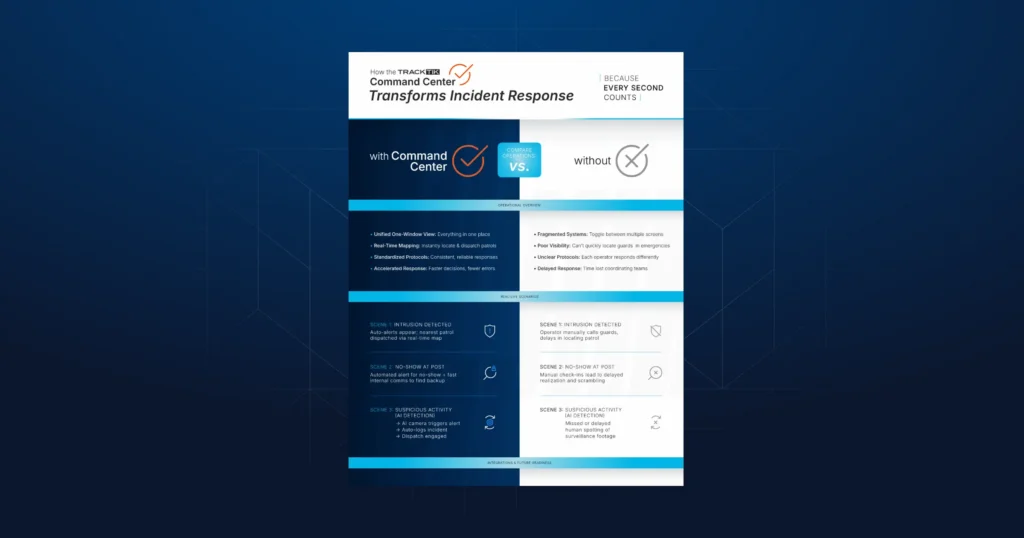
- A command center. Video, access control and alarms feed into one view where operators can dispatch the closest officer.
- Analytics. Business intelligence turns daily activity into trends, staffing decisions and client reporting.
The biggest risk is not missing a tool, it is running too many tools that do not talk to each other, as we explain in the era of unified security operations. TrackTik brings every layer together in one platform. Book a TrackTik demo to see it in action.
Frequently Asked Questions
Latest Articles
Featured Resources
See Trackforce in action
Book a walkthrough with our team and see how it fits your operation.