Paycheck Protection Flexibility Act: What Impact Will It Have on Your Business?

Trackforce
July 23, 2023 · 13 min read
2026 update: This article was first published in June 2020, when the PPP Flexibility Act had just become law. The Paycheck Protection Program has since closed to new applications, so the rules below are a historical record. They still matter if your company received a PPP loan: SBA rules require borrowers to keep loan and forgiveness records for years after a loan is forgiven or repaid (six years for loans of $150,000 or more), and the PPP and Bank Fraud Enforcement Harmonization Act of 2022 gives federal authorities 10 years to pursue PPP fraud. For current details, see the SBA’s Paycheck Protection Program page.
At the time of writing, the SBA had released statistics on PPP loans made to security services companies, and Congress had extended the program’s application deadline from June 30 to August 8, 2020, with more than $130 billion still unspent. The Treasury had also released a revised loan forgiveness application.
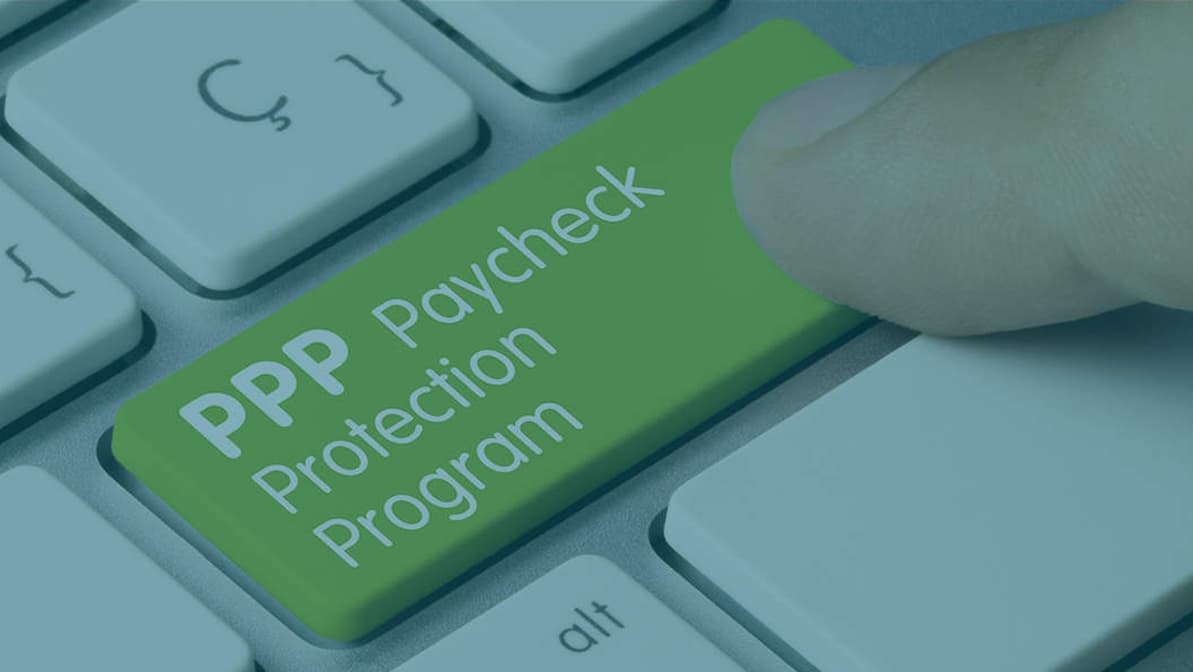
If there’s anything we’ve seen in 2020, it’s that change has become a commonplace event. When the pandemic hit the US in March, the biggest impact on the national shutdowns was on small businesses. While not all industries were hit the same way, there was a need to have some sort of relief. Enter the Paycheck Protection Program (PPP), which provides small businesses an entirely forgivable loan to pay their employees and cover a number of expenses. If small businesses meet the criteria, they would never need to pay this loan back. However, there were a few challenges with the criteria that made it difficult to use.
Key takeaways
- The Act made PPP forgiveness far more achievable.
It extended the covered period from 8 to 24 weeks and cut the payroll share needed for full forgiveness from 75% to 60%. - The 60% rule was not a cliff.
SBA guidance issued days after the Act clarified that spending less than 60% on payroll reduced forgiveness proportionally rather than eliminating it. - Rehiring rules gained real exceptions.
Businesses that couldn’t rehire staff or reopen to February 2020 levels could still qualify for full forgiveness. - Unforgiven balances got more time.
New loans carried a five-year term at 1% interest, and PPP borrowers could also defer payroll taxes. - Payroll records still matter in 2026.
Forgiveness depended on documented payroll and headcount. TrackTik keeps scheduled hours, verified time, payroll and billing connected in one system of record.
The Challenges with the Original PPP
While it was a huge benefit to have a forgivable loan that will help pay your employees, there were a set of criteria that made the loan difficult, if not impossible for business to effectively utilize it.
- Small businesses only had 8 weeks to use it: In order to qualify for forgiveness (i.e. not have to pay it back), the loan had to be used within 8 weeks of receiving the funds. Many businesses couldn’t even open their doors due to State and Federal shutdown mandates, so the ability to pay their employees when they can’t even open their business didn’t help the matter.
- Small businesses had to use 75% on Payroll: Other expenses, such as mortgage/rent, assets, etc. were equally as needed, but they could only use 25% of the funds on those items.
- Some Employees actually preferred Unemployment: With all the fears surrounding coronavirus, even if employers wanted to bring people back on, employees were more inclined to take the very generous unemployment benefit packages rather than risk exposure back in the workforce, preferring to “wait it out” and get back to work when it felt safe.
For these reasons and more, the PPP needed flexibility in order for it to be effective for small businesses. Many businesses, however, were considering returning the funds, simply because they were stuck in a place where they simply couldn’t use the money properly in the timeframe given.
The PPP Flexibility Act Changes the Game
Flexibility is exactly what came out of Washington D.C. The House and Senate both took rare bipartisan action to create new rules for the PPP which would ease the criteria from the original legislation. Aptly called the “Paycheck Protection Program Flexibility Act”, the bill aimed to target the primary challenges and rectify them:
The Changes at a Glance
| Requirement | Original PPP (CARES Act) | After the Flexibility Act |
|---|---|---|
| Covered period | 8 weeks | Up to 24 weeks, or 8 weeks by election for earlier loans |
| Payroll share for full forgiveness | 75% | 60%, with a proportional reduction below that |
| Rehiring and wage restoration deadline | June 30, 2020 | December 31, 2020 |
| Exceptions to FTE reductions | Limited | Added for inability to rehire or to reopen under COVID-19 restrictions |
| Term for unforgiven balance | 2 years | 5 years for new loans, extendable for existing loans by agreement |
| Payroll tax deferral | Not available to PPP borrowers | Available |
Forgiveness Period Extended to 24 Weeks
Current PPP borrowers can choose to extend the eight-week period to 24 weeks, or they can keep the original eight-week period. This is a major benefit to those businesses that simply couldn’t open during the pandemic, and has given them time to leverage the money appropriately.
Payroll Expense Requirement Dropped to 60%
Payroll expenditure requirement dropped to 60% from 75% allowing the amount available for other approved expenses to increase from 25% to 40%. This ensures that other expenses can be covered in the loan. As written, the Act appeared to make 60% an all-or-nothing threshold, but SBA guidance issued days later clarified that falling short reduced forgiveness proportionally rather than eliminating it. With the new split, full forgiveness became much more achievable.
Rehiring Deadline Extended to Dec. 31, 2020
Borrowers can use the 24-week period to restore their workforce levels and wages to the pre-pandemic levels now required for full forgiveness. This must be done by Dec. 31, a change from the previous deadline of June 30. All in all, this was the most difficult requirement. Not only did small businesses have eight weeks to use their loan, they had to restore their workforce by the end of June. This created a mad dash to the finish line. Now the process is more long-term, giving businesses time to recover.
New Exceptions for Forgiveness and Restoring FTEs
You can achieve full PPP forgiveness even if you don’t fully restore your workforce, but only if:
- You are unable to rehire employees that were employed on February 15, 2020 or could not find similarly qualified employees within the forgiveness time period or
- You were unable to restore business operations to Feb. 15, 2020, levels due to COVID-19 related operating restrictions.
This one is a little tricky. For many businesses, such as restaurants, the ability to fully open to pre-pandemic levels is nearly impossible. Most of these places can only operate at 25-50% capacity, meaning that there is simply no way they can fully restore to what they were at before. Also, by the time they do restore, their workforce may have found other employment. They simply might not find the best possible talent for some time. The bill accounts for this, but it will be complex to prove this when applying for forgiveness. We will see how the Small Business Administration (SBA) approaches this criteria.
New Five-Year Repayment Period
New borrowers now have five years to repay the loan instead of two. Existing PPP loans can be extended up to 5 years if the lender and borrower agree with the interest rate remaining at 1%. If small businesses don’t receive forgiveness on the loan, they still have the ability to use the money by paying it off over time. This time period is now much longer than before, giving ample time to ensure payment without harming finances.
Delay of Payroll Tax Payments
The bill allows businesses that took a PPP loan to also delay payment of their payroll taxes, which was prohibited under the CARES Act. Part of the PPP loans were tied to the other legislation, the Coronavirus Aid, Relief, and Economic Security (CARES) Act. Both provided certain aid to businesses. Businesses were eliminated from another benefit if they already took a different one. Payroll taxes was one of those provisions. Previously, businesses were not able to defer paying payroll taxes if they had a PPP loan, which the CARES act allowed. Now, businesses can take a PPP loan AND defer payroll taxes. Many businesses we’ve spoken to have not fully deferred their taxes, but some will.
What the PPP Taught Security Companies About Payroll Records
Forgiveness came down to proof. Borrowers had to document payroll costs, headcount and wages for a specific covered period and compare them with an earlier baseline. For contract security firms running officers across dozens of sites, that meant reconciling schedules, timesheets and payroll exports that often lived in separate systems.
The lesson outlasted the program. The records a lender asked for in 2020 are the same records an auditor, a client or a labor investigator asks for today, and keeping them ready is a core part of how security firms stay compliant.
The Records That Decided Forgiveness
- Payroll costs. Gross wages plus employer-paid health benefits, retirement contributions and state and local payroll taxes for the covered period.
- Headcount and FTEs. Average full-time equivalent employees during the covered period, compared with a reference period.
- Wage levels. Proof that pay for employees earning under $100,000 a year wasn’t cut by more than 25%.
- Non-payroll expenses. Statements for mortgage interest, rent and utilities.
Why Security Companies Found It Harder Than Most
Contract security runs on hourly, shift-based labor, so the numbers move constantly. Officers pick up extra shifts, part-timers fill gaps, and high turnover means the people on payroll in February are rarely the same people on payroll in June. Each of those factors made FTE averages and wage comparisons harder to calculate and harder to prove.
Overtime adds another layer. When extra hours aren’t captured and approved in one place, payroll totals drift away from schedules and invoices, a gap explored in the hidden cost of non-billable overtime.
How to Keep Payroll Audit-Ready Today
- Keep one system of record for hours. TrackTik business administration connects scheduling, time capture, billing and payroll, so you can show who worked, where and when.
- Pay from verified time. When pay rules and payroll taxes run from approved clock-ins, payroll stops depending on manual re-entry. See how TrackTik helps you automate payroll and workforce management.
- Reconcile payroll to billing every period. TrackTik contracts and invoicing turns verified hours into invoices, and TrackTik Margin Insight flags overtime and coverage gaps before payroll closes.
- Keep employee records complete. TrackTik people management unifies HR records, certifications, scheduling and leave, so headcount questions have a clear answer.
- Stay ready for benefits reporting. TrackTik ACA reporting and compliance helps you prepare 1094-C and 1095-C forms and catch discrepancies from the same workforce data.
- Retain records for the full review window. Keep PPP documentation at least as long as SBA rules and the 10-year fraud statute of limitations call for, and confirm the specifics with your accountant or attorney.
If your scheduling is modern but payroll and billing still run on spreadsheets, start with why a smart front office isn’t enough, then explore everything in TrackTik’s Back Office Operating System Suite.
Final Thoughts
Many businesses have breathed a sigh of relief when hearing about the PPP Flexibility Act. It was a good idea for helping businesses recover and made it better. In this time of uncertainty and fear, we all need a little flexibility to help us get through. This is just another example of the change and adaptability that will help the economy get back to a “new normal” more effectively.
Ready to make payroll audit-ready? TrackTik connects every scheduled shift, verified hour, payroll run and invoice in one platform. Book a TrackTik demo to see it with your own sites and pay rules.
Frequently Asked Questions
Latest Articles





Featured Resources

See Trackforce in action
Book a walkthrough with our team and see how it fits your operation.